Showing posts with label Official List of Non-Terrible Post-Milton Fiction About Christianity. Show all posts

1 July 2016

june bookblog.

PART ONE: BOOKS FINISHED.

Robert Farrar Capon, The Supper of the Lamb. This was a reread. I read it less than a year ago, but it seems to be ever-new. It's a meditation on cooking and theology. Capon was an Episcopalian priest with strong views on kitchen knives—so, you know. Dream man. There's a bit where he says that cooking with an electric stove is like playing the piano in mittens, a line I agree with fervently and quote frequently. It's full of brilliant little bon mots like that, and what stops it from feeling like nothing more than a book of one-liners is a) the larger unity of the work and b) Capon's gift for turning a phrase, which is such that I'll allow him anything up to half my kingdom.

Susan Howatch, Glamorous Powers, Ultimate Prizes, and Scandalous Risks. These are all part of the Starbridge series, six books about the Church of England in the twentieth century (which is to say, the thirties through the sixties). I rather enjoy thinking of it as Clergymen Make Bad Life Choices: the Series. Most of them are narrated by clergy—Powers is about Jon Darrow, an Anglo-Catholic priest and ex-monk, while Prizes focuses on Neville Aysgarth, Darrow's archdeacon. Even Risks, which is narrated by laywoman Venetia Flaxton, is full of clergymen and their terrible decisions. The first novel, which I read in May, was called Glittering Images and focused on Charles Ashworth, a canon.

I'm fairly certain Howatch must be an Anglo-Catholic, though I have no proof of this but the fact that she makes her Anglo-Catholic characters much more sympathetic than her low church characters. Certainly I had far more patience with Darrow than with the Liberal Protestant Aysgarth, and I don't think it's only because I'm quite high church myself. I had even less time for Venetia, who's a churchgoer but not a communicant. All her life choices are awful, though I must say it's not entirely her fault. (But really—a kindly intellectual German canon who's smitten with you sounds absolutely the top. Why focus your attentions on a married man who could be your father?) I really wanted to like the only female narrator, but there you are; it was a relentlessly bleak novel and I was glad to see the back of it.

(And I think Howatch has a bit of a tendency to fridge her female characters, a tendency which is doubtless brought into focus by reading them all in a row like I did.)

Nevertheless, I enjoy seeing different strains of thought in the Church of England, and I love seeing characters from multiple points of view as the books continue—especially the way characters who look sensible and well-adjusted outwardly are really just as tormented as everyone else, and the way even the most rascally of them—lookin' at you, Aysgarth—really are doing their best to serve God as well as they know how. Despite some misgivings it is with a joyful heart that I add these novels to the Official List of Non-Terrible Post-Milton Fiction About Christianity.

William Shakespeare, Julius Caesar. After finishing Risks I re-read Julius Caesar in a reader's theatre with my family. We've been taking turns choosing plays to read, and this was my brother's selection. I hadn't read it since, gosh, 2012? and I love it even more than I remembered. Casca is underrated. (My young brother's considered opinion on Caesar: Cassius is young, scrappy, and hungry, and he's not throwing away his shot. I suppose the corollary is that yond Alex has a lean and hungry look? Someone get on this.)

Howatch, Mystical Paths and Absolute Truths. Then I read the last two Starbridge books. I think Paths is probably my favorite of the series, but Truths—although chronologically it's set a few years before Paths—makes an elegant and satisfying ending to the sequence.

Jhumpa Lahiri, In Other Words. This, Lahiri's latest, was a recommendation from my mother. She's loved Lahiri's previous books, none of which I've read. This one is a memoir of language—the Bengali she learned as a child, the English that became her primary language, and her recent acquisition of Italian. This book was written in Italian, published there as In altre parole, and translated not by Lahiri but by translator Ann Goldstein. It's less a straightforward narrative than a collection of essays, less travelogue than introspection (the Guardian review called it "monkish," inexplicably), and it contains two short stories she wrote in Italian. I think perhaps those stories, "The Exchange" and "Half-Light," are the strongest parts of the book, limpid pieces that are both autobiographical and dreamlike.

It brought back my own experiences learning languages (French, Latin, Koiné), and it reminded me also of reading Dante's Commedia in a bilingual edition and trying to puzzle out the Italian. "Assume Italian if you have it not," the professor said, which did not prove to be the most helpful advice he ever gave us. It's also a book about feeling lost and foreign, experiences I can identify with all too well.

Jennifer Donnelly, Revolution. I've got a long post about this one in the works. Suffice it to say for the moment that I don't recommend it.

Kazuo Ishiguro, Never Let Me Go. I wanted to read The Buried Giant since it's been getting such good reviews, but it was out. This one was marvelous, though, a lovely chilling little book. I'll definitely be seeking out more of Ishiguro's work. Maybe The Remains of the Day?

Robert Farrar Capon, Between Noon and Three: Romance, Law, & the Outrage of Grace. The mind behind this is obviously the same as the mind behind The Supper of the Lamb, but this book is a much more ambitious book and as such a much more challenging read in every sense. It's the sort of thing that I'm going to have to worry at for a long while before I really feel settled with it—and there are a few points I do actually disagree with—but on the whole I love this book. It starts as a romance novel, turns into a Socratic dialogue, and ends as a theological high-wire act wherein Capon juggles concepts of reconciliation, judgment, hell, and heaven. There's also two sermons (one of them in the style of John Donne) and a short story about the mob. He's not very good at genre, but then genre is a social construct mostly of use to booksellers. Fr. Capon shocks, and does so gleefully, but I never feel that he's out purely for shock value. And stylistically he's a delight.

William Shakespeare, As You Like It. It was my turn to choose a Shakespeare play, and I thought I'd plump for a comedy. My mother and brother quit after two acts contending that it didn't make any sense, but the faithful remnant finished it on our own and loved it—I think it may be my favorite of Will's comedies.

Jaques is my favorite character, perhaps unsurprisingly, but I love Rosalind and Touchstone and Celia and even Orlando. (Theory: Jaques is what Hamlet would have grown up into if he'd lived in a comedy.) It's sweet and funny of course, and the poetry is to die for. Indeed the only thing I can think of to make this play better is that Rosalind's father the Duke should be her mother the Duchess, and all her lords and attendants in the forest should be women as well. Nothing less than a sylvan misandrist utopia in the forest of Arden will satisfy me. Jaques is the only one allowed to be a man, as he can be the token dude who nobody much likes. I wonder why nobody ever hires me as a director?

Ta-Nehisi Coates, Between the World and Me. I have nothing useful to say about this book, except what everyone already knows, which is that Coates is a great stylist and that this book is incredibly important. It's not a perfect book and it deserves honest and thoughtful criticism—there's nothing more dangerous than a pedestal—but I'm not the person to do that criticism, not only because I'm white but also because I haven't thought, or read, or learned, nearly enough to talk intelligently.

Susan Palwick, The Fate of Mice. I love short stories, but like most (all?) short story fans I've got used to expecting at least one dud in any given collection. The Fate of Mice isn't like that at all. I have favorites—"Sorrel's Heart," "The Old World," the title story—but every story here is just right and I wouldn't change a thing about the lineup. "Gestella" has displaced Suzy McKee Charnas' "Boobs" as my favorite werewolf short story, "Beautiful Stuff" made me care about zombies, and I think "Ever After" might be a definitive take on Cinderella. There's a wide range of genres here—some of the stories, like "Jo's Hair" and arguably "GI Jesus," aren't fantasy or sci-fi, in fact—but most of the stories are sad, all of them are kind, and they're full of a deep and palpable concern for women's lives. The introduction, by one Paul di Filippo, says that Palwick's stories are about the question "How does one live boldly in the face of looming personal extinction?" Spoilers, the answer is caring about each other. I'll definitely seek out Palwick's novels.

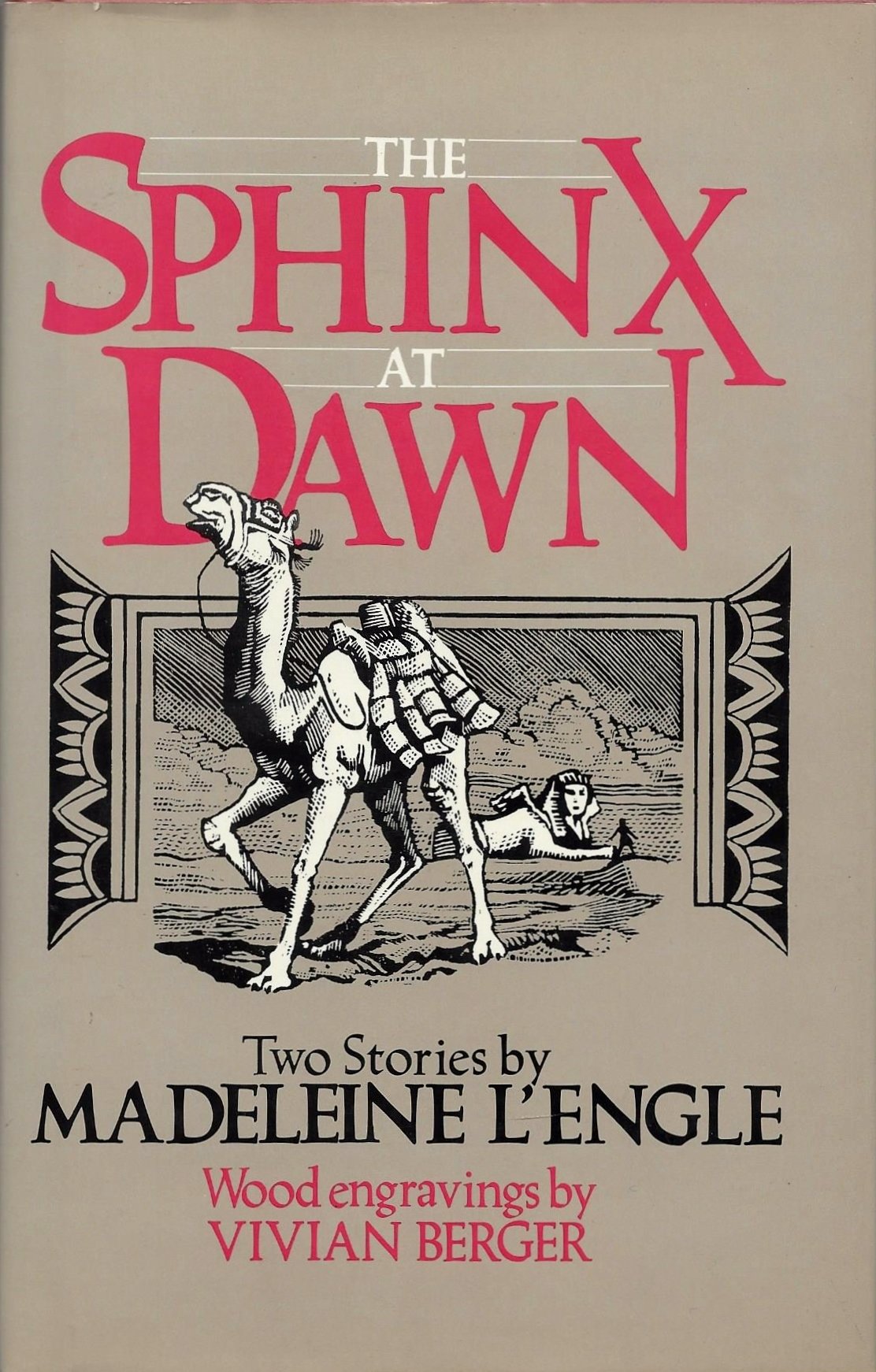
Madeleine L'Engle, The Sphinx at Dawn. Reviewed here.

PART TWO: BOOKS ABANDONED.

Christopher Moore, Fool. Women in the audience—you know when you’re reading a book by a male writer, and you want to like it, but as you go on you realize that the man who wrote this never imagined a woman reading it? It so often feels personally insulting—you’re trying to enjoy yourself and the book keeps saying, “No. No. No. Not for you.” If on a winter's night a traveler was like that, but I managed to enjoy it anyway because a of all it was published in '79 and second of b Calvino was a genuinely game-changing genius. Fool came out in 2009, and Italo Calvino it ain't. It's a comic novel narrated by Lear's Fool, and all through it kept reminding me of Terry Pratchett's Wyrd Sisters, which is a comic novel based on Macbeth. It will astonish none of you if I tell you Wyrd Sisters is far the superior novel. Pratchett, if you believe it, could write old women without boggling at how disgusting they are, and young women without making them into sex objects. I know! No bloody wonder, is it, that when I first read Pratchett's novels I spent quite a while thinking he was a woman. If I sound bitter it's because I'm bitter.

Also, the footnotes. I usually adore footnotes in fiction, but Moore uses his footnotes to define words like "portcullis," "trencher," and "iamb." A few words I could maybe allow, but these? I'm reading a novel about Lear's Fool; I'm not here to be condescended to, and few of any of the definitions had even a scrap of humor in them. (There is exactly one person who can get away with defining words for me in narration, by the way, and his name rhymes with Jiminy Cricket.) Defining British slang, as Moore does occasionally, is a bit more comprehensible given that the book is aimed at an American reader, but it's still a bit unacceptable in a post-Google age. And, you know, I have limited sympathy for Americans who try to be British or for anybody who tries to be Richard Curtis*. Moore's successfully replicated all the misogynistic and homophobic bits of Blackadder (of which there are more than I generally prefer to admit), but the things that actually made it funny seem to remain by and large beyond his grasp.

There are quite a few good lines in amongst the cheap sophomoric gags. I did laugh out loud more than once! But I soured on this book incredibly quickly and I wonder if it wouldn't have been better off as a short story.

PART THREE: CURRENTLY READING. 

Terry Pratchett, Wyrd Sisters. (Reread.)

Umberto Eco, The Name of the Rose.

Susanna Clarke, Jonathan Strange & Mr. Norrell. (Reread.)

Helen Marshall, Gifts for the One Who Comes After.

Geoffrey Chaucer, The Canterbury Tales.

As of the end of June 2016, I've read 119 books since January. I'll see you next month with another pile!

*Yes, I know there was more than one writer on Blackadder. It was by way of being a synechdoche.

30 June 2016

writing update & some l'engle.

Image from Amazon.
Music: Songs from As You Like It, the RSC and Laura Marling / Sunny Spells & Scattered Showers, Solas.

Tea: Orange oolong with milk & honey. Questionable.

Word count: 5100.

&

So it's just typical that the same week I published the "life of Christ" roundup post I would read Madeleine L'Engle's The Sphinx at Dawn. If I'd found it just a few days earlier, it would have demanded a (high) place on the rankings.

Published in 1982, this is a set of two short stories for children, "Pakko's Camel" and "The Sphinx at Dawn." They're about a boy named Yos who's an immigrant living with his parents in Egypt. Yos is short for Yesoshuah. Yep! I've been reading a lot of short stories lately, and I think a good short story is a higher form than a good novel; the reduced length might seem that there's less room to go wrong, but in fact it only means that anything you do get wrong will stand out even more. These are really good short stories, the kind that get hardly anything wrong. I loved "Pakko's Camel," but my favorite was "The Sphinx at Dawn," which is about Yos having a riddle contest with the Sphinx. It's note-perfect, with deliberate shades of Tolkien.

I'll be up front with you: there's nothing much here in the way of incident, which appears to have frustrated reviewers. That's because they aren't about plot but about character and world. They're not allegories, either—indeed, I think the best thing about them is how straightforward they are, their willingness to be literal even (especially) about the supernatural.

So. Imagine, if you will, the gospel of Matthew as written by Lloyd Alexander. (In his Arkadians or Lukas-Kasha mode rather than his Prydain mode. Come talk to me about Lloyd Alexander!) Imagine the child Christ being friends with a talking camel and a time-traveling unicorn. (So actually not Alexander at all then, because in his hands the camel would be a cat.) Then imagine that but written with a subdued lyricism that feels wholly reverent without ever crossing the line into either stiffness or soppiness. Imagine a deep knowledge of Old Testament history combined with an awareness of Greek drama and mythology. L'Engle is subtle, funny, entirely magical.

These stories are about what it would mean for a child to be the sinless embodiment of love, but also a real kid. Yos is very obviously still growing and learning; he's confused and uncertain, he loves his parents and he's got a good sense of humor. We're always advised not to write about protagonists without flaws, and so a Christian writing fiction about Jesus is going to run into some fairly obvious problems. L'Engle succeeded I think because she agreed with one of my own deeply-held convictions, which is that good is a good deal more interesting—and evil a good deal duller—than is commonly supposed.

I miss Madeleine L'Engle. This book is shockingly unknown; I wish I'd read it younger, and I can't believe it's out of print. It's not for everyone, but if your sensibilities align at all with mine you'll probably like it. It's short, and you ought to read it if you can get your hands on it.

27 June 2016

fiction about the life of Christ: a definitive ranking.

This one book about Jesus' guardian angel. Oh, all right, I know what it's called; I just wanted to give you a second to enjoy the concept in its purest form. It's called Darien: Guardian Angel of Jesus, by Roger Elwood. I never read it, but we had it in my high school library and I've chortled over the jacket copy more than once.
It was over.

He had failed.

His mission had ended in utter disaster.

Assigned the great honor and daunting responsibility of being the guardian angel to the Son of God, he had begun with vigilance, hope, and commitment, but his hands had been tied at every turn. "Why, Lord? Why?" he groaned over and over as he grieved beside his master's body in the darkness of the tomb. Then he heard the voice of God speak again...

"Remove the stone...!"
The nineties were an incredible time. I still can't decide if I actually want to read this or not, but I adore the implication that Darien has no idea what the plan is. They just gave him the job to mess with him!

"Jason Zerillo Is an Annoying Prick," Robert Shearman. (Published at link as "Jason Zerillo, fl. 30 AD.") I enjoy Rob Shearman's writing usually but this one's a solid eh. It is clever and I can see what he's doing, but the characterization of Jesus is—it's not good, frankly, and even craftwise I feel like this is below Shearman's usual standard. I'd read it before, but I had to re-read it for this post because I remembered almost nothing about it. (Unlike the other Shearman story on this list, which is—it's almost too memorable.) Ultimately the thing is that there's a crucifixion and no resurrection; I wasn't planning on awarding very many points for doctrine on this list, but I have a few scruples left. 

All the Gospel movies I watched in high school Bible classes. So many white Christs. The only thing I remember about this lot is that during the nativity portion of one of them there was a rather sweet scene between Mary and Joseph, and my teacher said with no little satisfaction, "And that's why Jesus had brothers." You heard it here first, kids: St. Joseph the Worker was smokin'. (In fact it was ambiguous whether he meant "because St. Joseph was smokin'" or "because Mary and Joseph were massively into each other." Until I hear otherwise I'm going for a little from column A and a little from column B.)

The one I'm writing. I've been working at this off and on for a while, on the basis that no one else is going to write the one in my head so I might as well give it a crack. There was even a NaNoWriMo iteration of it, about which the less said the better. It focuses on John and Peter, because they're my favorites. It's got lines in like "Andrew gave Cephas a look I recognized. It meant, and had always meant, something like 'Simon, shut up until Dad/that Pharisee/Yeshua is out of earshot, please,'" which should give you some idea of the tone I'm aiming at. (At which I'm aiming.—Ed.) It's a thing in progress. Respect the thing.

The Bronze Bow, Elizabeth George Speare. This is the single dullest novel I've ever read.

"Tiny Deaths," Robert Shearman. I'd call this theological science fiction, but before that I might almost be moved to call it psychological horror. Starring Jesus, as after the crucifixion he goes through a series of reincarnations. I hardly think I need to say that I don't believe anything of the sort ever happened. This is... well, it's a hard story to write about. It's definitely not for everyone, and I can't really in good conscience recommend it. But—while it's tempting to dismiss it as blasphemy, and I should really like to do so, I can't shake this awful suspicion there's something genuinely beautiful and true going on there. It's a haunting story, and the point it makes about Jesus knowing intimately all our small and stupid lives and dying for us anyway is as true as anything even if the way it gets there is extremely debatable. It's almost a rebuttal, albeit a very strange sort, to Stevie Smith's "Was He Married?" which is a poem I've been thinking about off and on for years. I don't think there's much I can add beyond linking this thoughtful review.

Christ the Lord: Out of Egypt, Anne Rice. (There is a sequel, The Road to Cana, which I have not yet read.) This is a story about the child Christ, told from his own point of view. It's badly let down by the fact that Rice can't write convincing children. Hardly any of us can, especially as POV characters. Terry Pratchett could, though I'm not saying I'd want to see his take on the infant Christ. Otherwise it's... I think the best word is interesting, and also very well-researched. I don't mean to damn it with faint praise, there—I really enjoyed being able to see just how much research went into this. All the best things in it, though, come out of the medieval religious ballad tradition.

The entire medieval religious ballad tradition. We're leaving out the Christmas ones, but look up "St. Stephen and King Herod" sometime; it's insane. "The Bitter Withy" is a perennial favorite, of course, the story of how the nasty big boys wouldn't let Jesus play so he murdered them. And then Mary beat him—well, you would, wouldn't you? My favorite, though, is "Judas." It's one of the oldest surviving English folksongs, thirteenth century at least. It's in thirteenth-century English, too, so allow me to provide a brief prose translation.
On Maundy Thursday, Jesus rose up and said to Judas, "Judas, you've got to go into town and buy us bread for supper. Here's thirty pieces of silver. I suppose in the broad street you might meet some of your family!"

Judas waltzed off into town and ran into his wicked sister. "Judas," she said, "you deserve to be stoned for following a false prophet." 
"Shut up," said Judas, "if Jesus heard you he'd be avenged." 
The sister, fed up with all this, suggested that Judas take a nap. While he was napping, she pinched the silver off him and did a runner. When he woke up and realized Jesus' silver was gone he pulled on his hair so hard his scalp bled and everyone thought he was mad.

Then Pilate turned up. "Would you sell us Jesus?"

"I wouldn't sell my lord for anything," declares Judas, "except, ooh, hang on, I really do need to get back that thirty pieces of silver I owe him. I don't suppose...?"
...which may be the ultimate example of robbing Peter to pay Paul. I think you know the rest of the story; there's a brief scene in the upper room, but this is the meat of it. I really can't think why more groups don't do recordings of this. I think possibly Steeleye Span did one once, but then Steeleye Span have done everything. By the way, I don't want you thinking that I think that the medieval Christians who produced this song actually believed anything like it, and I don't want you going "ha, silly medieval Christians." They didn't necessarily believe something just because they sang about it, and the Dark Ages continue to be a myth. Still, it's an insane story. Here's someone singing it.

"The Exercise of Virtue," "Storm Clouds," and "Some Secrets in a Privacy Forever Ours," tree_and_leaf. Yes, those links are to a fanfic archive. Mock not, lest ye be mocked. Tree_and_leaf writes great fanfiction about religion—they (I don't know their gender for certain and I'm trying to break myself of the habit of assuming all fanfic writers are women) have also done lovely variations on "Susan Pevensie finds God" and "an Evangelical who thinks magic is of the devil gets her Hogwarts letter." The Narnia one is my favorite—the author shows signs not only of liking and understanding Susan but of liking and understanding Lewis, if you can credit it. "The Exercise of Virtue" focuses on the Syro-Phoenician woman, "Storm Clouds" is about the calming of the storm, and "Some Secrets in a Privacy Forever Ours" is about John after the resurrection. They're wonderfully human stories, moving and funny all at once, and the disciple snark is excellent. I think I detect more than a bit of Dorothy Sayers in these.
"Rabbi," growled Peter from behind an oar—and it was obvious that he would have yelled had he had breath—"It is my professional opinion that I'm perfectly justified in being bloody terrified, because we are all going to die very soon unless some sort of miracle happens."

"Oh you of little faith," said Jesus, sounding vaguely disappointed. "Doesn't my professional opinion count for anything?"
"Yeshua," Unapologetic, Francis Spufford. This book is a defense of Christian feeling (whereas an apologetic is a defense of Christian thought), and Spufford describes the life of Christ as a story that Christians have instead of an argument. He devotes this chapter to a fictionalized account which functions as a short story on its own and which I could well imagine appealing to people who couldn't be bothered to read the whole book—or indeed people who would be horribly offended by the whole book; in many ways this chapter is one of the most orthodox bits of Unapologetic, and Spufford is in general much stronger on Jesus than he is on God. (And, rather surprisingly, he's not much good on the disciples at all.) Lines like this:
So tell me, teacher, says a solid citizen, as the remains of the baked eggplant are cleared away, what must I do to be saved? Yeshua's gaze slides across the tapestries, the silver bowls for washing guests' feet, the candlestick blessed by the Chief Priest of the temple himself. I'd get rid of this lot for a start, he says.
are great bits of writing, and as close as I've ever come to reading the Gospel novel that exists in my head. (Because if I'm honest what I really want is a novel written by someone with all my aesthetic sensibilities but, also, the writing skill which in my case I have not got.)

The Man Born to Be King, Dorothy L. Sayers.
A cycle of radio plays on the life of Christ; I should very much like to see/hear them performed, but they're terribly good even in print. Her colloquial language took more guts then than it would now, and it pays off, and if I don't remember very many details about the plays themselves I think that's down more to me than to her. She's very good on Pilate and the thief on the cross, and very good indeed on Lazarus. (He's a bit suicidal. It really really works.) I'm planning a re-read as soon as possible.
LAZARUS: I love you dearly. To say that I would die for you is nothing. I would almost be ready to live for you if you asked me.
JOHN: Oh, Master, hold him to that promise. Look, Lazarus, you have made your sister cry.

"Friday Morning," Sydney Carter. He's best known for "Lord of the Dance," of course, but I think even that song much as I love it doesn't get across just how much Carter got it. Again, to cite Francis Spufford—Christians have stories instead of arguments. This is the best story I know about the Problem of Evil.
"To hell with Jehovah," to the carpenter I said.
"I wish that a carpenter had made the world instead.

Goodbye and good luck to you, our ways will soon divide.
Remember me in heaven, the man you hung beside.
It's God they ought to crucify, instead of you and me,"
I said to the carpenter, a-hanging on the tree.
Here's N.T. Wright singing it. I'd quite like to sing that in chapel, but I don't think you're allowed to say "to hell with Jehovah" in Edman Chapel or indeed anywhere on Wheaton's campus. Blessed shame.

And there it is. It should go without saying that this ranking isn't anything like as definitive as it amuses me to pretend it is, and that especially when it comes to my favorites it can be shuffled around a bit and I'd still put my name to it gladly. Also, I haven't read anything like all the work on the subject that exists, and when I've read more I'll certainly provide updates on them. Suggestions from the floor are more than welcome; they'll go onto the to-do list and eventually into the rankings. I won't read Philip Pullman's one, though, as I've been practicing self-love. (Joke, more or less. Don't look at me like that; it's still not so vile a sin as self-neglecting.)

Taste, as ever, exists on a Cartesian plane where the axes are "respect" and "affection." I may need at some stage to go three-dimensional and add a z axis for "agreement," creating among other things the options "I agree with you but I don't like or respect you" and "I like and respect you but you're wrong." Plotting all these stories out might be instructive: I have quite a bit of respect for "Tiny Deaths" as a piece of craft if not as a piece of theology, but whether I like it on any given day is a toss-up; I adore the medieval ballad tradition but I'm afraid I don't always take it very seriously. (Chronological snobbery?) I don't like The Bronze Bow and I don't think it's very good either. The top [edit for clarity: by top I mean best—as in top of the list—rather than the physical top of the post] three or four here, though, I both like and respect and can recommend without hesitation.

And if you object to anything about my rankings, I am as always ready to fight it out in the comments.

24 June 2016

poetry friday: fanfare for the makers.

Recently I've been watching BBC2 sitcom Rev. It focuses on Adam Smallbone, the hapless vicar of St. Saviour's in the Marshes, an inner-city London church. It's a bit, a very little bit, like a contemporary version of Susan Howatch's Starbridge novels if they were funnier and much less sexy and everyone in them was a great deal less competent. Adam's a disaster of a person, and he definitely doesn't deserve his wife (played by Olivia Colman, who continues—marvelously—to be in everything), but he's trying really hard and for all its cynicism the show takes his faith and his calling seriously. There's terrifying Evangelicals, terrifying overachieving curates, and a terrifying Archdeacon. And Adam's own congregation, which is as terrifying as it is tiny. It's not a perfect show: like many comedies it needs more sympathetic women, and Adam desperately needs to shape up. Still, I like it a lot. I couldn't possibly choose a favorite episode. Maybe the Christmas episode? But I love the one with the Evangelicals; not sure if I've actually met Darren, but he's definitely a friend of a friend.

At some stage I'm going to do a proper post about the show, with screencaps and analysis and all that nonsense. At the moment though, I just want to share a poem that Adam quotes a few lines of in the first season: "Fanfare for the Makers," by Louis MacNeice. I've not read much (any) MacNeice and haven't a volume of his poetry on hand. Fortunately, this show has fans who've put the poem on the internet. I source from one such:
A cloud of witnesses. To whom? To what?
To the small fire that never leaves the sky.
To the great fire that boils the daily pot.

To all the things we are not remembered by,
Which we remember and bless. To all the things
That will not notice when we die,
Yet lend the passing moment words and wings.

So fanfare for the Makers: who compose
A book of words or deeds who runs may write
As many who do run, as a family grows
At times like sunflowers turning towards the light.

As sometimes in the blackout and the raids
One joke composed an island in the night.
As sometimes one man's kindness pervades

A room or house or village, as sometimes
Merely to tighten screws or sharpen blades
Can catch a meaning, as to hear the chimes

At midnight means to share them, as one man
In old age plants an avenue of limes
And before they bloom can smell them, before they span

The road can walk beneath the perfected arch,
The merest greenprint when the lives began
Of those who walk there with him, as in default

Of coffee men grind acorns, as in despite
Of all assaults conscripts counter assault,
As mothers sit up late night after night

Moulding a life, as miners day by day
Descend blind shafts, as a boy may flaunt his kite
In an empty nonchalant sky, as anglers play

Their fish, as workers work and can take pride
In spending sweat before they draw their pay.
As horsemen fashion horses while they ride,

As climbers climb a peak because it is there,
As life can be confirmed even in suicide:
To make is such. Let us make. And set the weather fair.
It's an ode to the world at large, and to all the quiet loves and competencies that fill it and keep it running. I love that although it's about making, MacNeice doesn't restrict the definition of that to things we would conventionally recognize as quote creativity unquote. The whole world is full of creative acts if you know where to look for them, and it's only unfortunate that so many people don't. "Molding a life," your own or a child's, is a creative act. The reference to suicide at the end—well, I don't know quite what to do with that, except to recognize that it takes some thinking and that it's a poem worth thinking about. (A poem about which it is worthwhile to think.—Ed.)

And to return to Rev: There's a scene in a later episode where Adam is discussing preferment with his reader Nigel, and says that he really isn't interested in being a bishop or a dean—he just wants to be a good parish priest. Nigel doesn't believe him of course, but the line rang very true to me. I think the use of this poem expresses something fundamental about Adam, or about who he'd like to be. (Will you seek and serve Christ in all persons, loving your neighbor as yourself? I will, with God's help.) This celebration of the tiny vital things that make up the world reminds me of another favorite, Charles Reznikoff's "Te Deum":
Not because of victories
I sing,
having none,
but for the common sunshine,
the breeze,
the largess of the spring.

Not for victory
but for the day's work done
as well as I was able;
not for a seat upon the dais
but at the common table.
(I'm trying to keep length here under control, but see also "Alive Together" and "Doing Laundry on the Last Day of the World" and "Great Things Have Happened." I often think how good I would be at compiling anthologies.)

This seems to be an animating principle for a lot of fiction I love—it's at the heart of Call the Midwife and of Terry Pratchett's Tiffany Aching novels, and it's there in Connie Wills' insistence that "History was indeed controlled by blind forces, as well as character and courage and treachery and love. And accident and random chance. And stray bullets and telegrams and tips. And cats." (The particular line is from To Say Nothing of the Dog, but Willis affirms the principle over and over again.) It reminds me too of Ursula Vernon's recent essay on gardening and how "often it comes down to one person who kept something small but important from being lost forever."

And so what we have is making, in all its forms. What is there to do but make, what but "compose / a book of words" or "tighten screws or sharpen blades" or even to plant "an avenue of limes"? What but find our own work and do it quietly, lovingly, just as well as ever we can? What but witness, and bless, a world that doesn't seem to notice us? It's not about saving the world, exactly, except perhaps in the sense that he who saves one life saves the world entire—it's about delivering a child, planting seeds in a garden you never get to see, rescuing a cat. (NB: rescuing a cat is the plot of To Say Nothing of the Dog. Read it; it's good.) Let us make. And set the weather fair.

Roundup.